🗃️
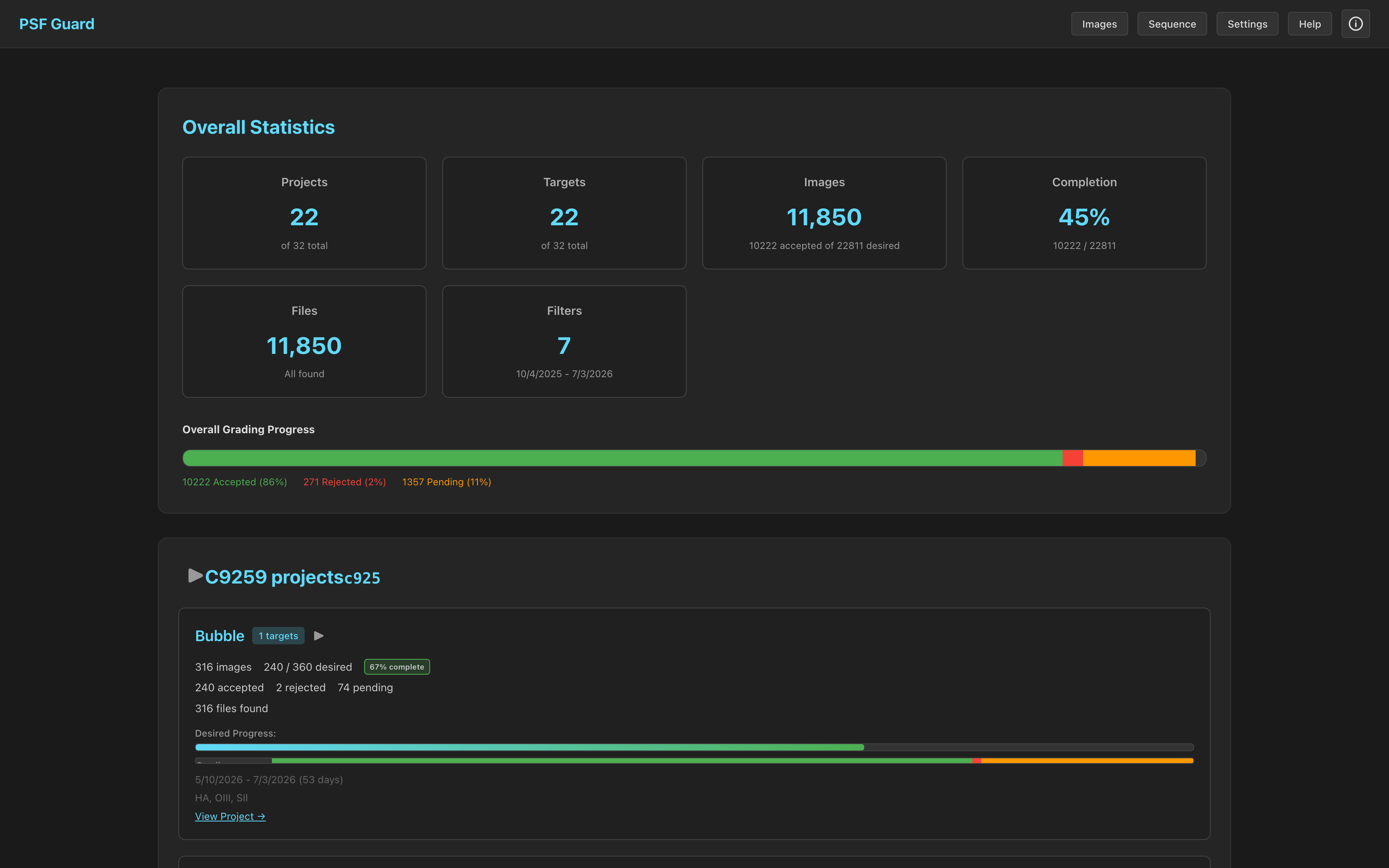
Organize every frame
Build a catalog from FITS folders or open an existing Target Scheduler
database. Browse by target, session, filter, date, and grade while the
source files stay in place.
🖼️
Fast visual grader
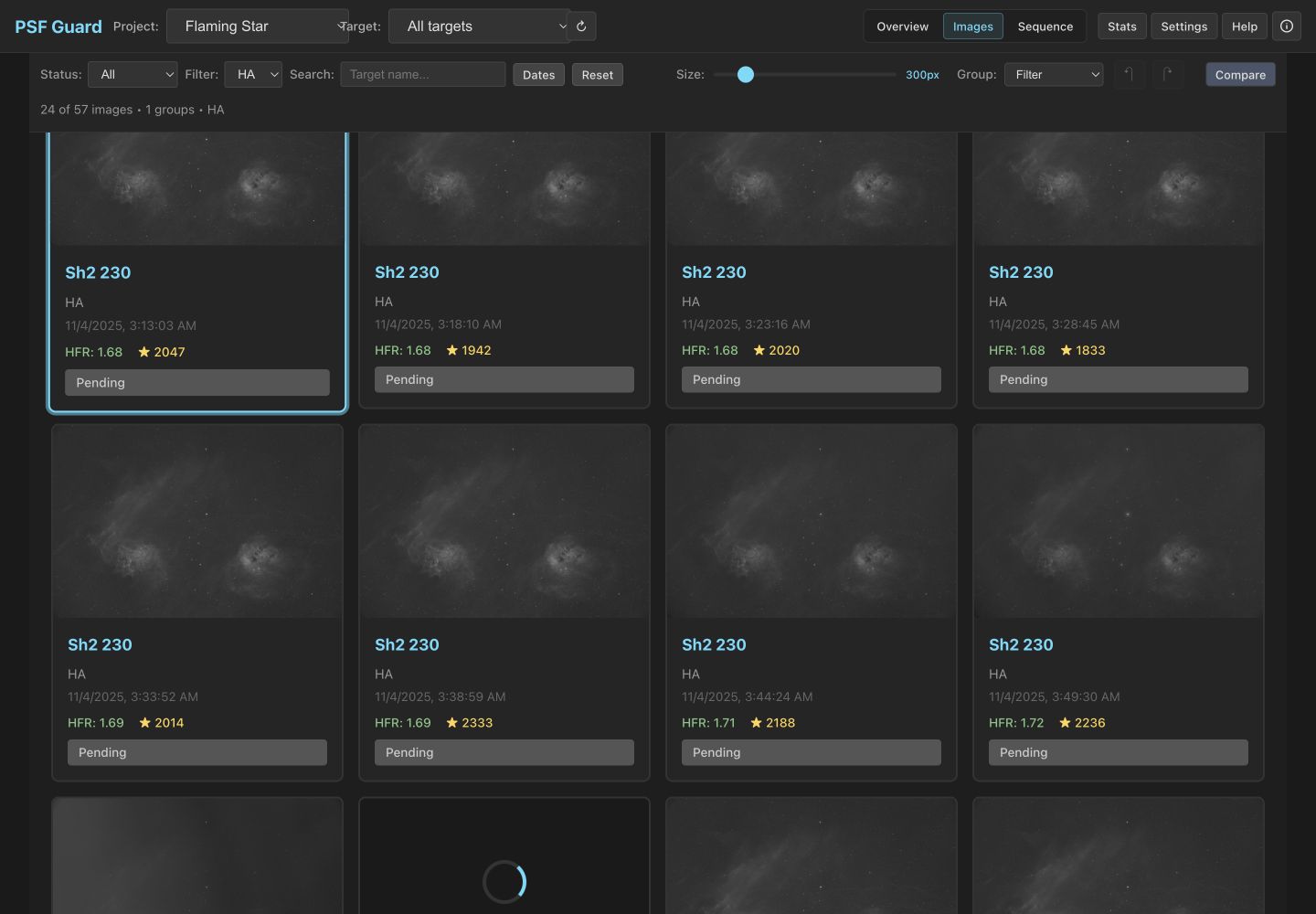
You can use the same grader user interface in the desktop app or any
web browser. It provides auto-stretched previews, synchronized side-by-side
comparison zoom and pan, batch operations, keyboard shortcuts, and full
undo/redo support.
☁️
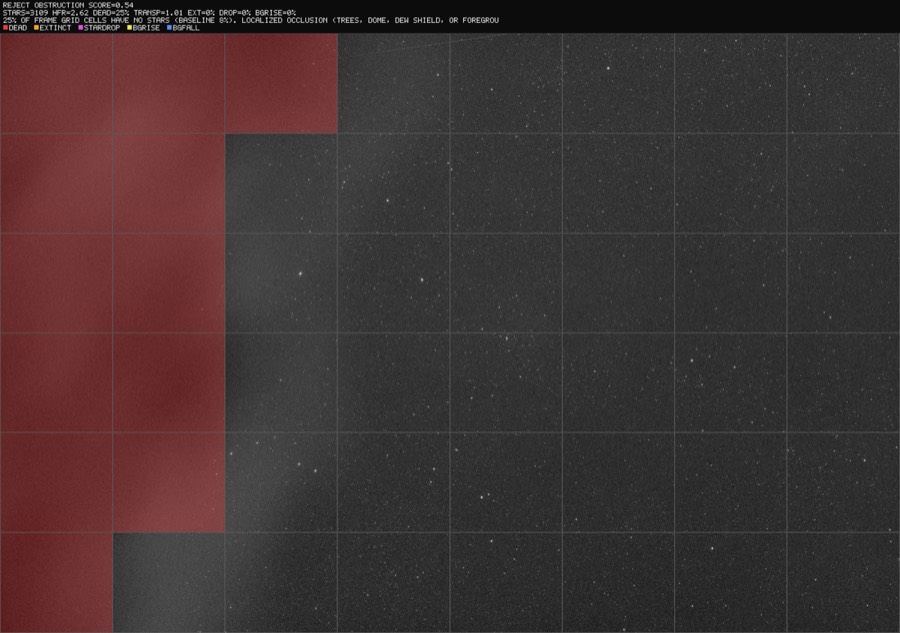
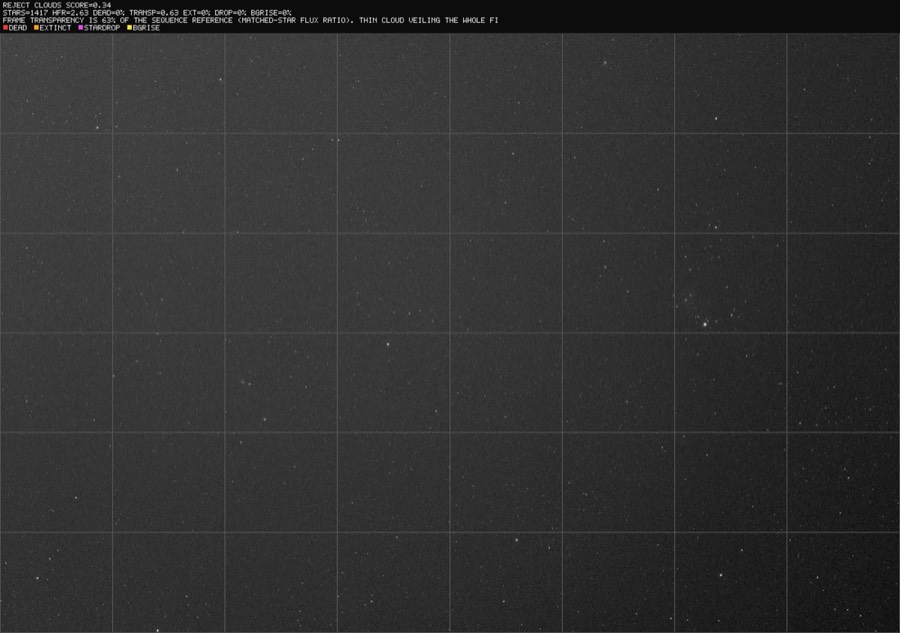
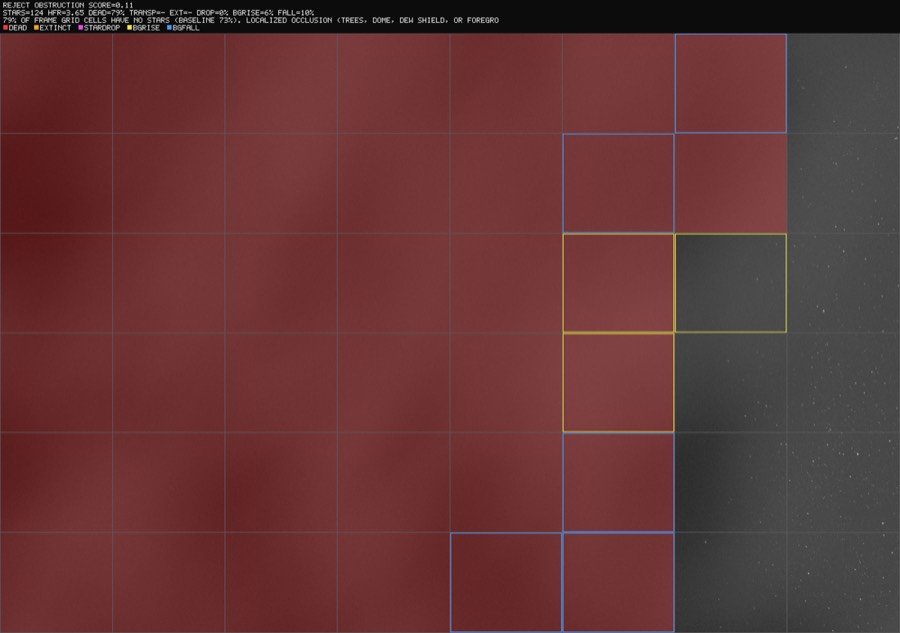
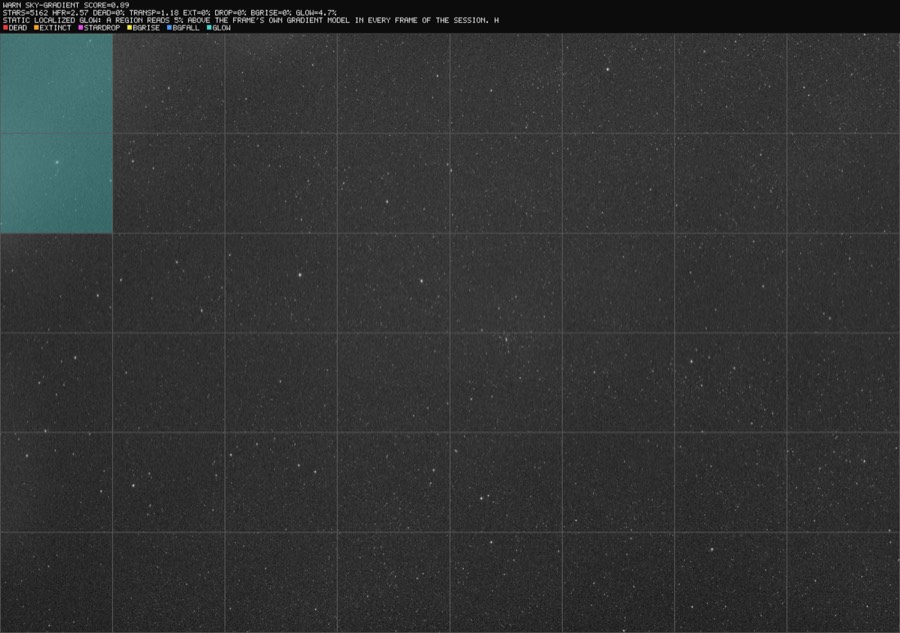
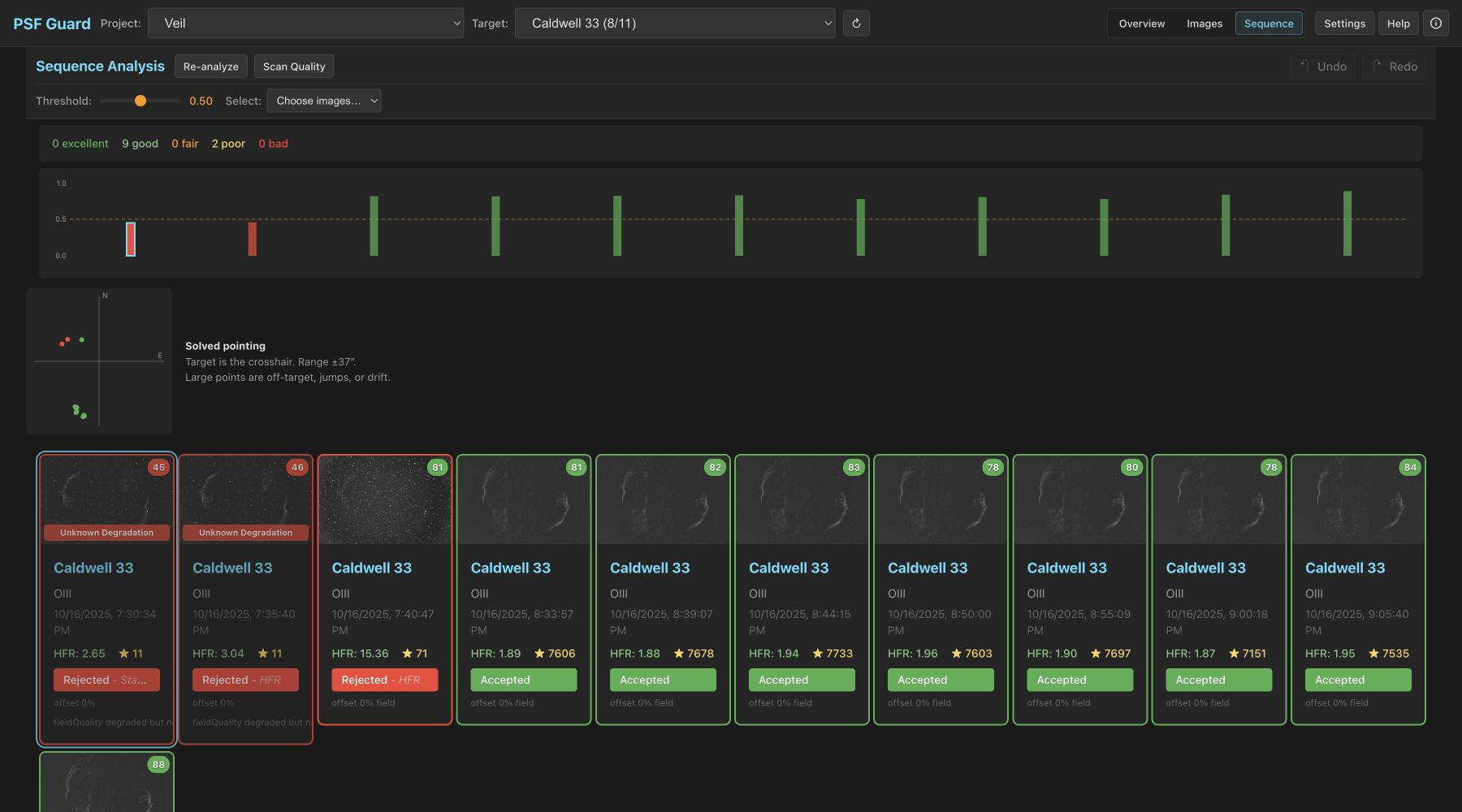
Automatic quality screening
PSF Guard uses spatial metrics, cross-frame photometry, and plate-solving
to detect occlusion, clouds, thin veils, errant light, off-target pointing,
and tracking loss. The system provides the specific analysis and evidence
for every grade.
🌌
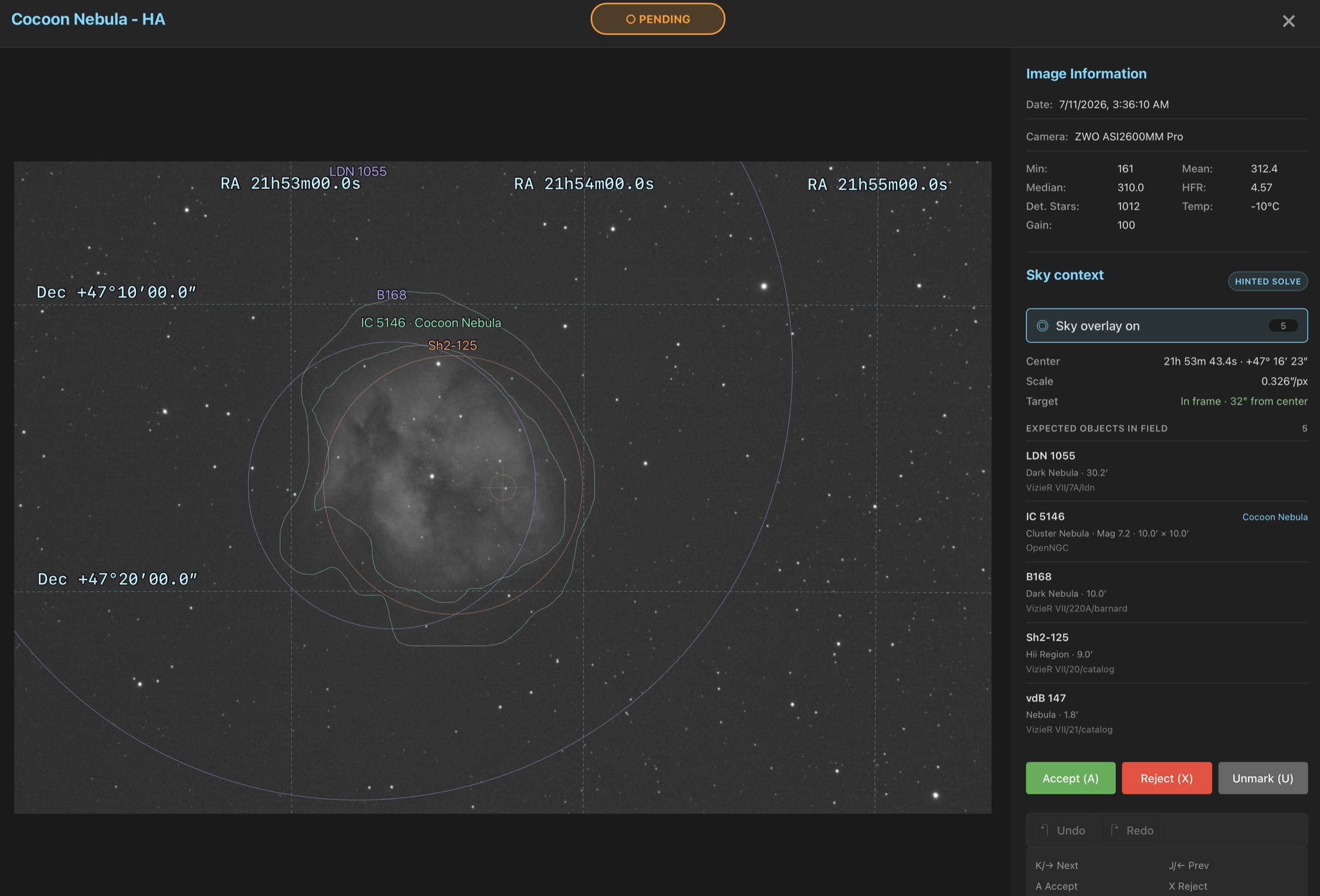
Sky context & plate solving
The application displays expected catalog objects from coordinate
metadata, solves image pixels on demand using the Seiza engine, and overlays
object labels, outlines, an RA/Dec grid, and the measured center offset.
🔬
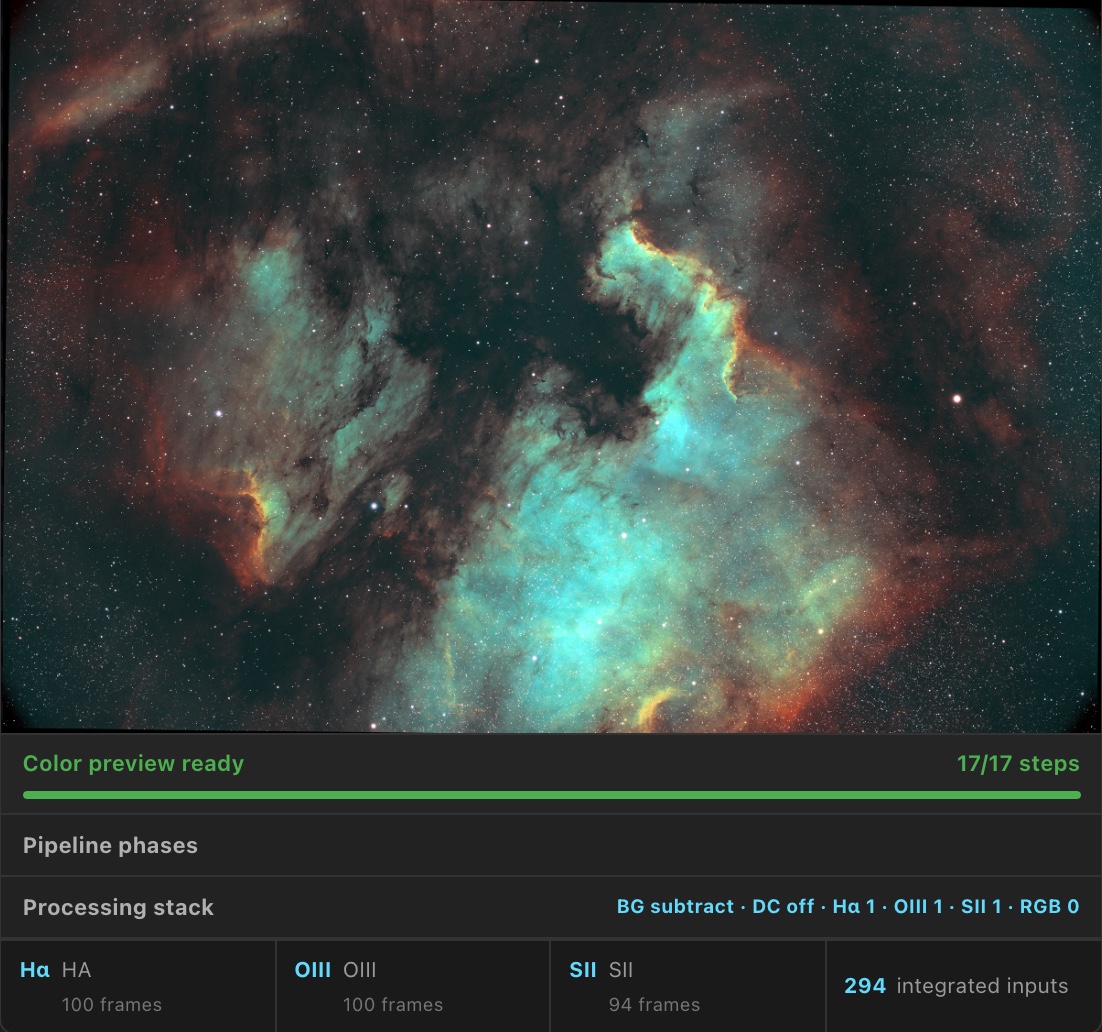
Live stack previews
You can register and stack the accepted frames for each channel, then
combine them into LRGB or narrowband (SHO, HOO, Foraxx) color previews. The
preview tool includes background extraction, optional deconvolution, and
linear FITS download features.
🔁
Optional scheduler link
You can open a Target Scheduler database directly or synchronize state
with a separate telescope computer. Recording your grades keeps the
scheduler's acquired-image count accurate so it can replace rejected
frames.
📥
Catalog & plan
You can build a catalog from FITS folders. The application reads image
headers to organize projects, coordinates, and plans, then processes the
pixel quality data in the background.
🗂️
Safe reject archival
The application moves rejected frames and their sidecar files out of the
directory tree used by your stacking software. This process is documented,
idempotent, and reversible, ensuring that restoring files never overwrites
existing data.
🔭
Two-machine workflows
You can synchronize projects, captured images, and grades between the
telescope database and your local grading machine. This allows you to pull
recent data, grade the frames locally, and push the results back.
⭐
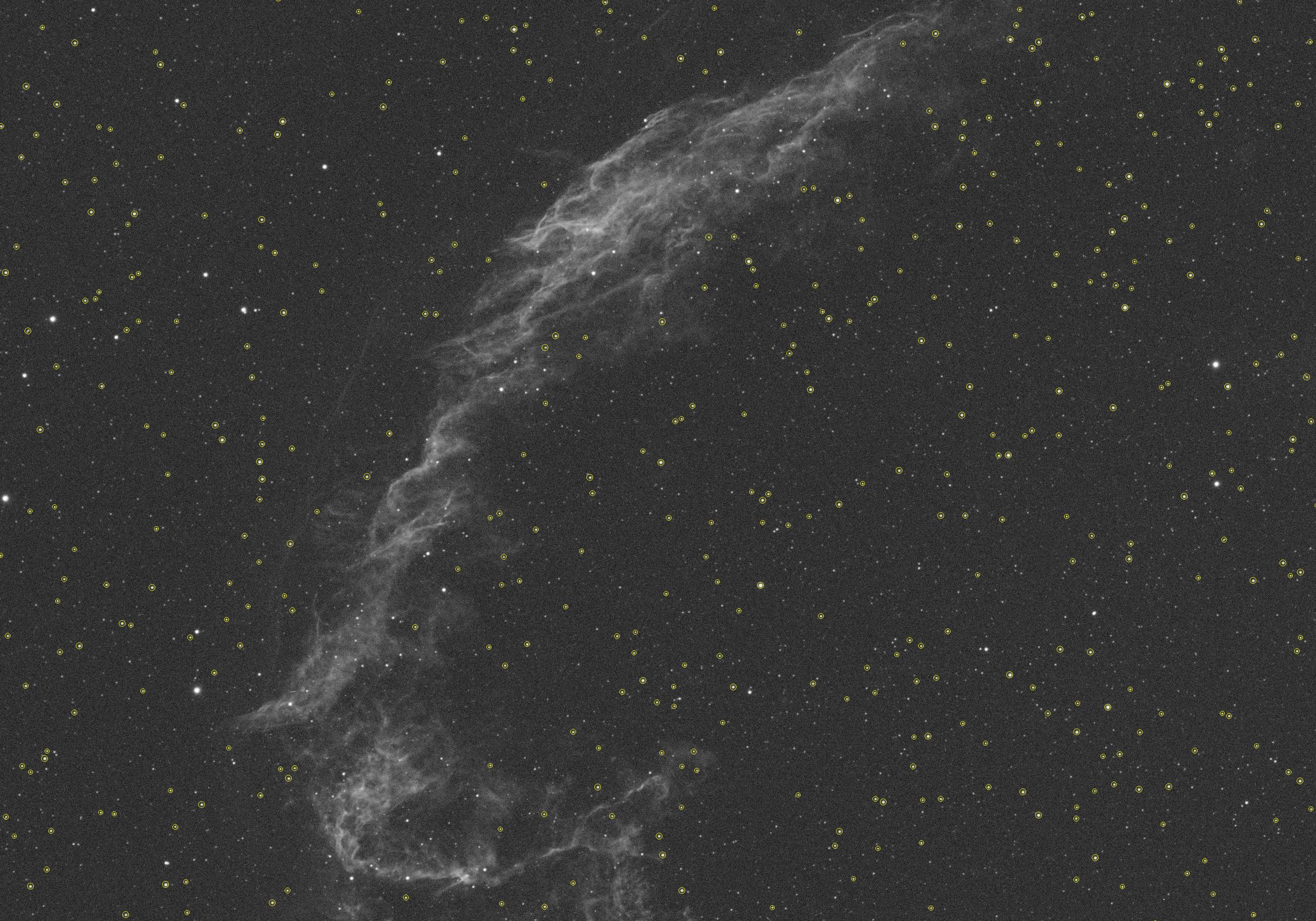
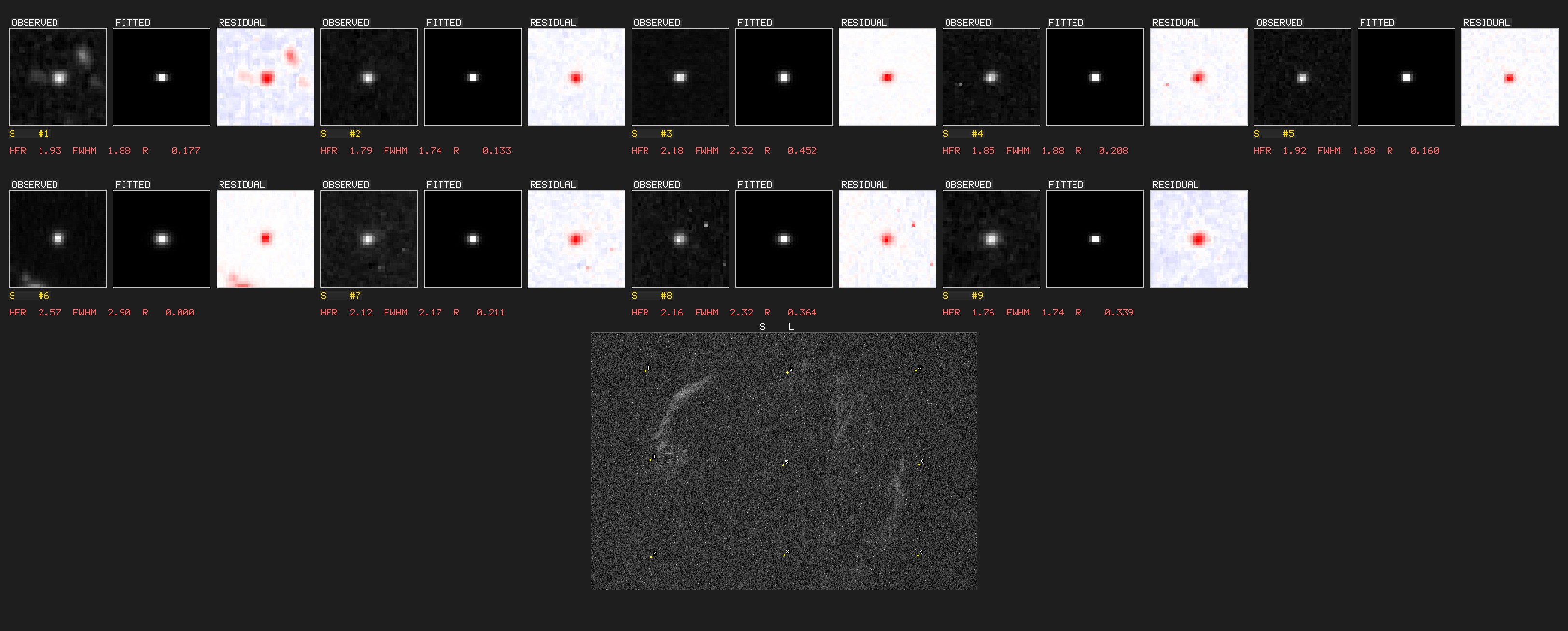
Star detection & PSF analysis
The software includes star detectors ported from N.I.N.A. and HocusFocus,
which feature Gaussian and Moffat PSF fitting, annotated star maps, and
residual visualizations.